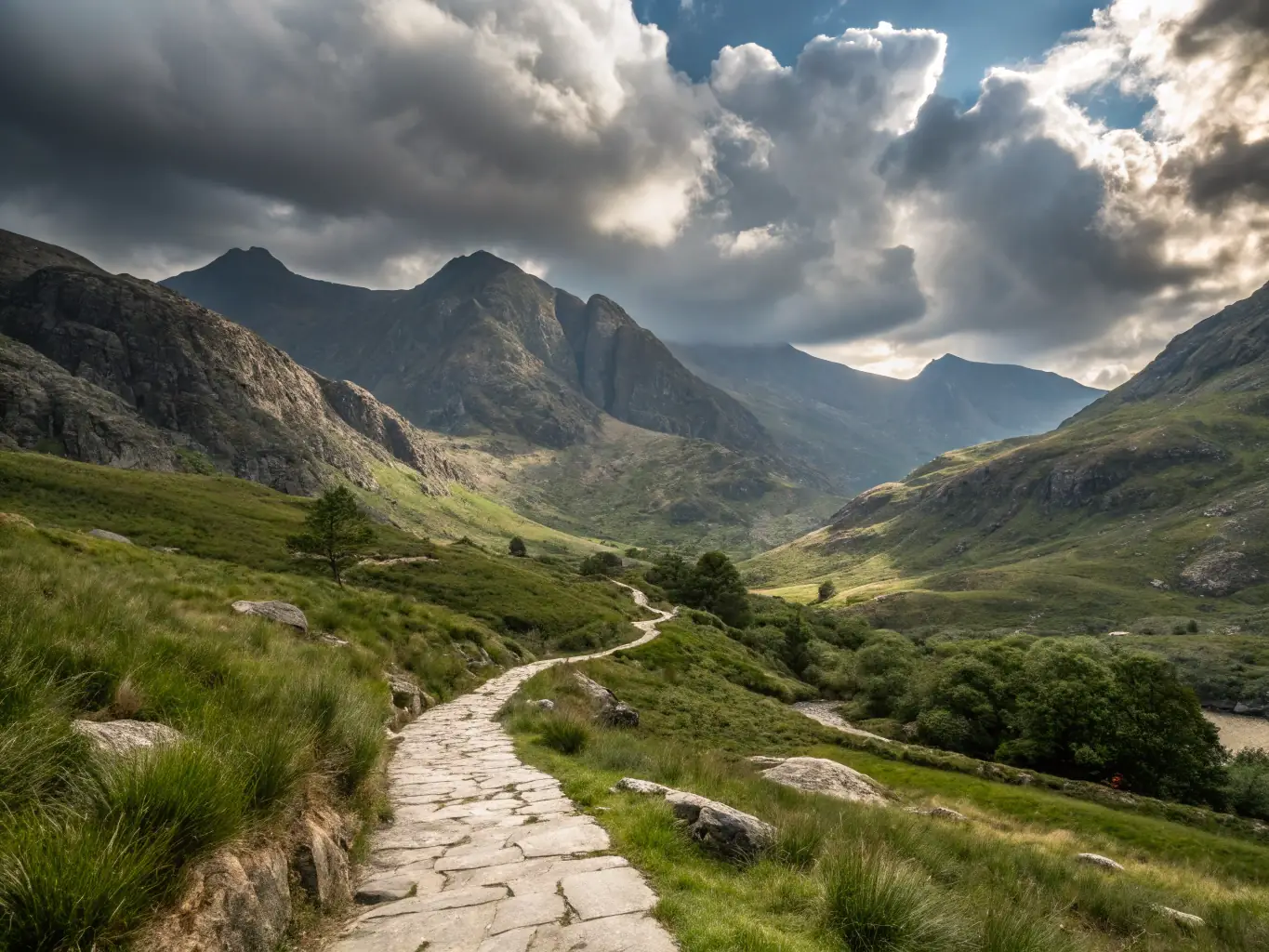
Inspiration
The qualities we design for, and what they look like when a garden gets them right.
IDEAS TO APPROACH YOUR GARDEN DESIGN
A garden in an extraordinary setting has a harder job than a garden anywhere else. It has to hold its own against the view, and it has to look as though it grew from the place rather than arriving with the furniture.
Visual references rather than completed projects. For our own work, see Design Studies.
Six Things That Make a Garden Belong
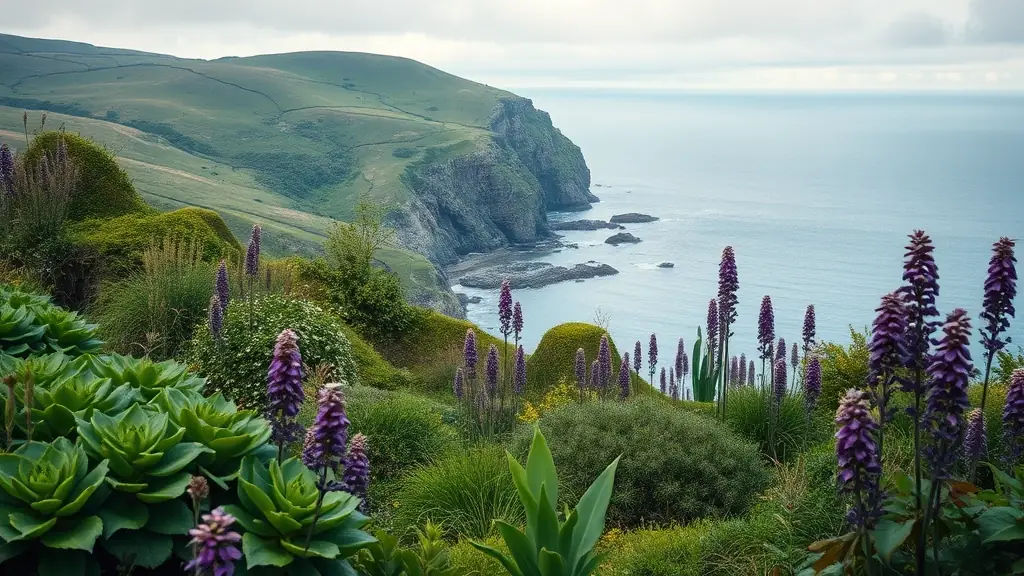
01 — Framing a Borrowed View
A view is not the same as a garden that uses one. Left to itself, an open prospect flattens: the eye goes straight to the horizon and never comes back.
The design’s job is to hold the eye at the right height on its way out. Terracing to bring the ground up. A hedge line that stops just short. A gap left deliberately open between planting, so the mountain or the water arrives as something framed rather than something simply there. Done well, the landscape beyond becomes part of your garden without you owning an inch of it.
02 — The Terrace Against the House
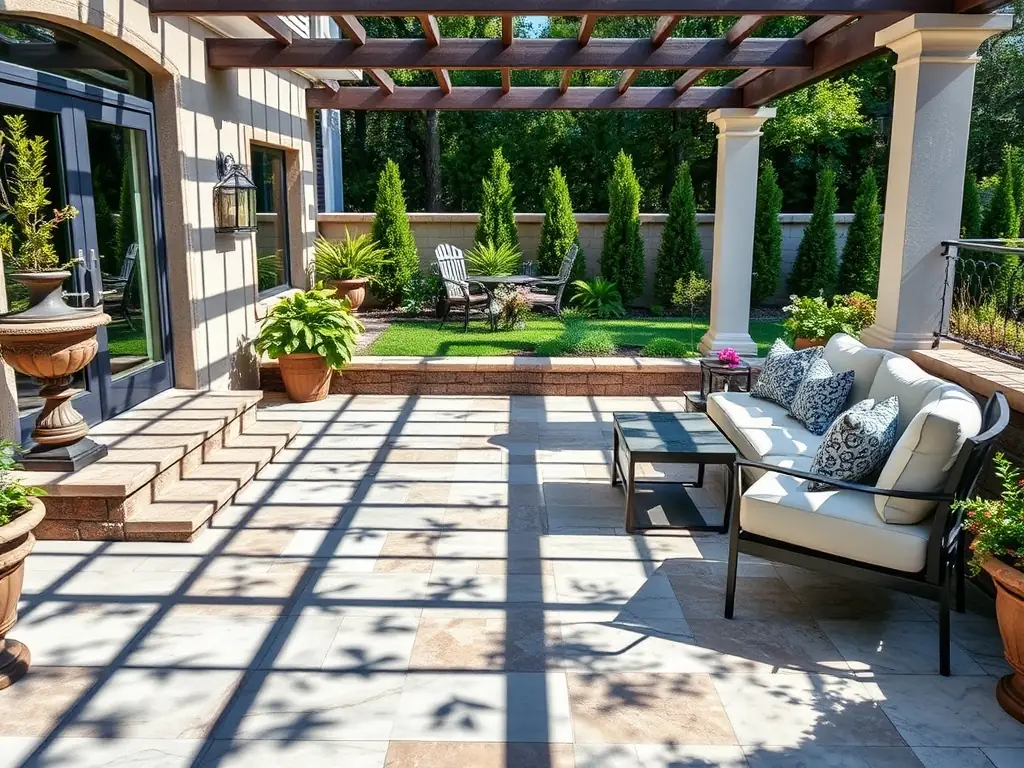
The first outdoor room is the one you step into. It works when it feels like a continuation of the room behind it rather than a separate place you have to decide to visit.
That means getting the level right, so there is no step down into somewhere lesser. It means paving that reads against the floor inside, and a boundary that encloses without shutting out. It means being usable at the hours you would actually use it, which is usually morning and evening rather than noon. Get this room wrong and the rest of the garden is looked at rather than lived in.
03 — The Outpost, and the View Back
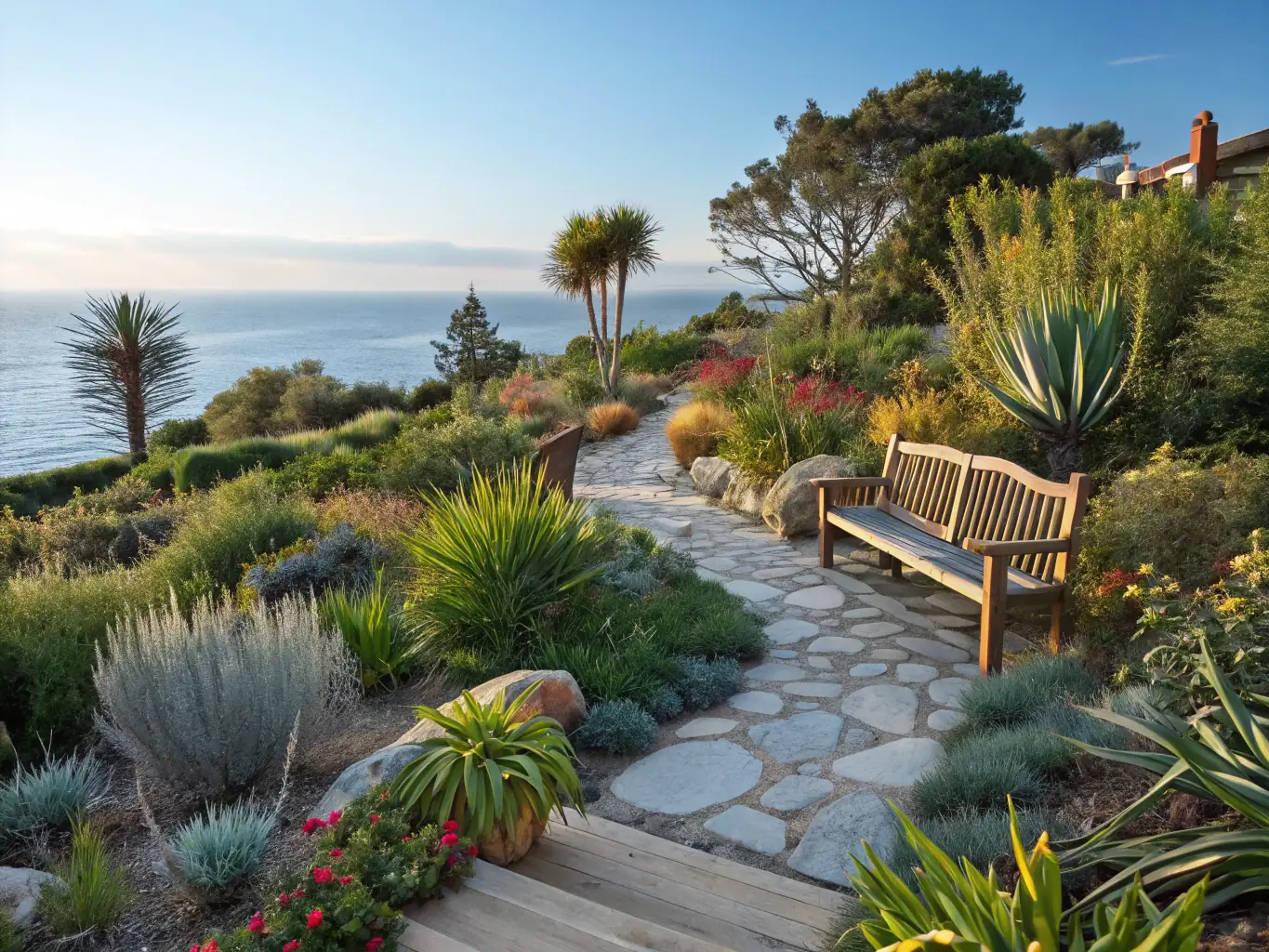
Most gardens have a terrace by the house and then a stretch of nothing. The far end is where a garden gains its depth.
An outpost does three things at once. It gives the garden a destination, so the ground between becomes a journey rather than a gap. It turns and looks back, so you see the house within its setting, which is a view you never otherwise get. And placed well, it becomes the station from which the wider landscape is read: the mountain, the estuary, the valley falling away. A sheltered deck, a pergola, a seat set into planting. Somewhere to walk to, and somewhere to arrive.
04 — Planting That Holds Through Winter
A garden designed for June is a garden that disappoints for nine months. In this part of the world, where summer is short and the light goes early, that matters more than most places.
Structure is what carries it: clipped evergreen giving form when everything else has gone, grasses that turn amber and stay standing, seedheads left uncut to hold frost. Planting chosen for silhouette as much as flower. The test of a scheme is not how it looks in high summer but whether you want to look at it from a window in February.
05 — Shelter in an Exposed Place
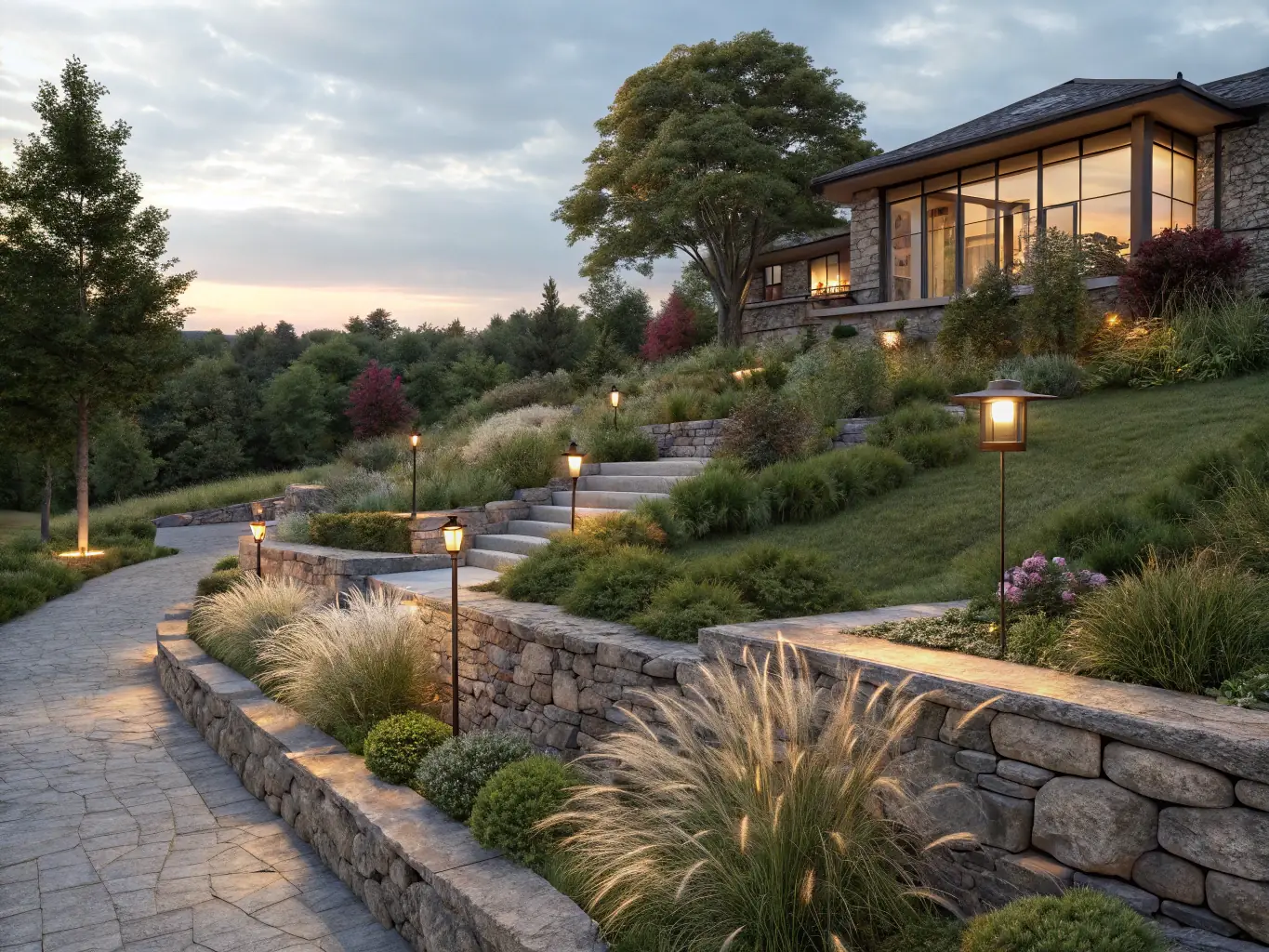
On an exposed site, the wind decides what is possible unless the design decides first. Without shelter, half the garden is unusable and half the planting struggles.
Shelter comes from structure: a wall placed to break the prevailing wind, hedging that filters rather than blocks, landform banked to lift the flow. The aim is a sequence of conditions rather than one blanket solution, so there is somewhere warm early, somewhere shaded at midday, somewhere protected when the weather comes in. A well-sheltered garden in a wild setting feels like a refuge. An unsheltered one feels like standing outside.
06 — Material Drawn From the Place
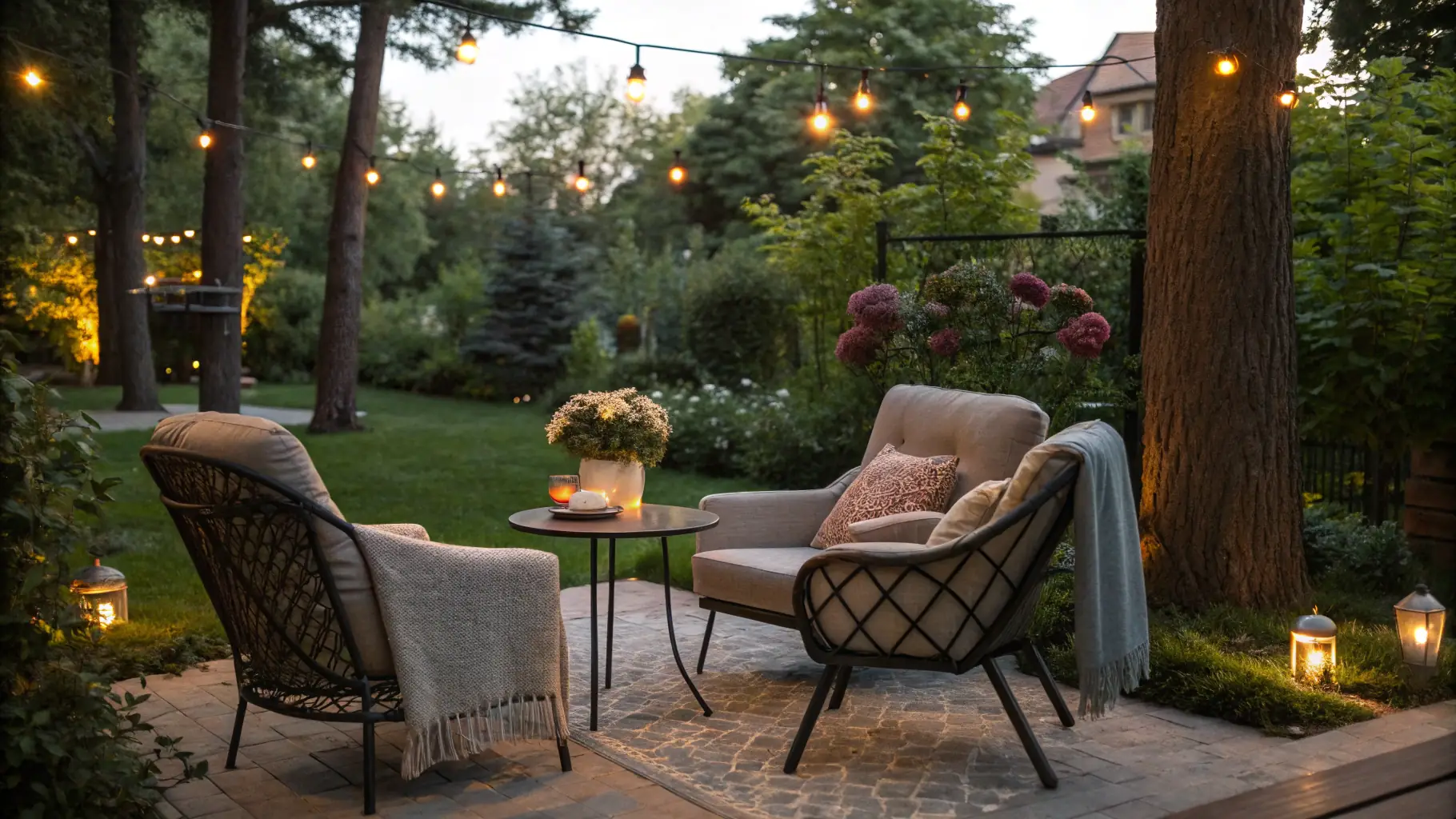
Every landscape has a vocabulary: the stone it is built from, the walls its fields are divided by, the colours its weather produces. A garden that uses that vocabulary settles. One that imports its materials never quite does.
In North Wales that means slate, local stone, drystone walling that echoes the field boundaries around it. Gravel that matches the ground rather than contrasting with it. Timber weathered to grey. Planting that includes the natives you can see from the garden as well as the ornamentals you choose for it. The point is not to imitate the landscape but to build from the same material it is made of, so house and garden and setting read as one thing.